How do you actually make money trading meme coins without becoming exit liquidity?
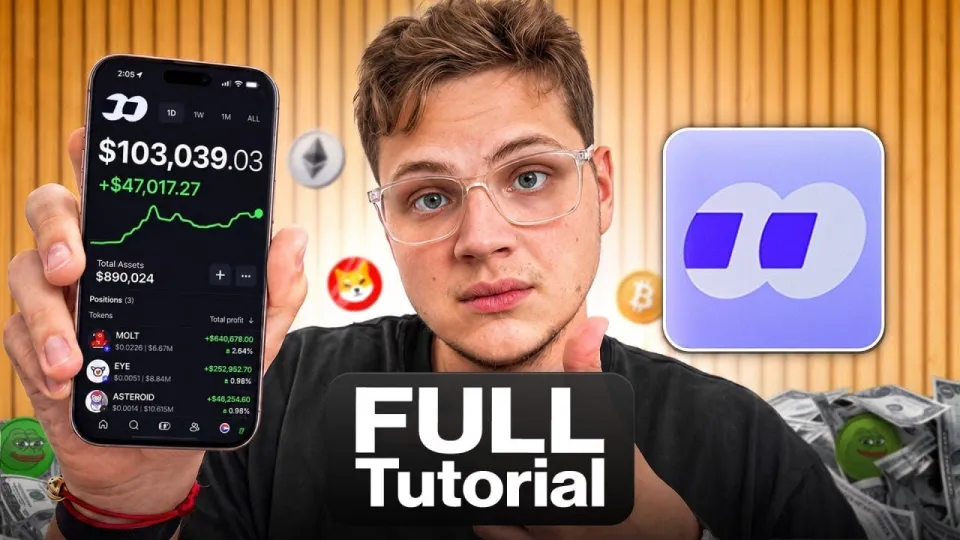
Video: How To Make Money Trading Memecoins (fomo app tutorial)
You can order the same kind of articles for your own video to boost it on YouTube and Google. Just message the Telegram bot @sat_sit_bot. The bot writes and publishes the articles itself (with your YouTube video embedded) on popular topical websites (no ads). Your first 50 articles are free.
Meme coins are a high-risk, high-variance trading niche where money is made by buying attention early and selling into the crowd that arrives later, not by holding a joke token and hoping it becomes a real business. Practically, that means treating every meme coin as a short-lived liquidity event: you need a fast execution setup, a hard rule for position size, and an exit plan written before you click buy. Tools like the FOMO trading platform exist to compress discovery, charting and execution into one screen so you are not juggling five tabs while a token moves 40%.
Why meme coins are a trading product rather than an investment
Meme coins have no cash flow, no revenue and usually no roadmap, so their price is a pure function of attention and liquidity. That makes them closer to a momentum instrument than to an equity: the only thing that matters is whether new buyers keep arriving faster than existing holders sell. On Solana, where the FOMO workflow lives, token creation is cheap and permissionless, which means thousands of new pairs appear every day and the vast majority never reach meaningful liquidity. The traders who profit consistently are not the ones who pick the single best token; they are the ones who take many small asymmetric bets, cut the losers fast and let a few winners run. The channel Orangie Web3 frames this as a skill you practise, not a lottery ticket you buy.
How the FOMO app fits into a meme coin trading workflow
The FOMO app is a trading interface built around speed: it surfaces trending tokens, shows charts and lets you execute without leaving the page. In the tutorial published on Orangie Web3, the platform is presented as the entry point for people who want a simple path from spotting a ticker to placing a trade. A practical workflow looks like this:
- Open the trending or new-pairs feed and filter out tokens with liquidity that is too thin to exit.
- Check the chart for structure — is there a real bid, or is the price a straight vertical line on almost no volume?
- Verify contract basics: holder distribution, whether the deployer wallet still holds a large share, and whether liquidity is locked.
- Size the position so a total loss is an amount you would shrug at, not an amount that changes your month.
- Set your exit levels before entry, then execute the sell mechanically instead of negotiating with yourself.
What copy trading gets wrong about meme coin wallets
Copy trading looks like the shortcut to meme coin profits, but it is structurally late by design. A large wallet that wants to move a token will often accumulate on a separate account first, then buy on its main, publicly watched wallet — the trade you copy is the one that creates the price move, not the one that captured it. By the time a notification reaches you and your transaction lands, you are buying from the people who planned the move. This is why the most liked comments under meme coin tutorials are usually the skeptical ones: experienced viewers point out that mirroring visible wallets means paying the markup. If you use copy features at all, treat them as a source of ideas to research, not as an execution strategy, and never copy a trade into a position larger than your normal manual size.
Which risk rules keep meme coin trading survivable
Survival in meme coin trading is a risk-management problem before it is a picking problem. The distribution of outcomes is brutal: most tokens trend toward zero, so a single oversized position can erase weeks of gains. Rules that experienced traders converge on include capping any single position at a small percentage of the trading stack, refusing to add to losers, and taking partial profit on the way up rather than waiting for a target that may never print. Slippage and fees also compound — on fast-moving Solana pairs, a rushed market order can fill far from the quoted price, and failed transactions still cost fees. A drained wallet is a common story in this niche, and it usually traces back to clicking a malicious link or signing an approval on a fake mint site rather than to a bad chart read. Keep a separate trading wallet funded only with what you are willing to lose.
What beginners actually ask before their first meme coin trade
The questions new traders ask most often are about timing, tools and whether the whole thing is a scam. A few patterns come up repeatedly in community discussions around the Orangie Web3 tutorials:
- "Am I too late?" If you are asking after a token has already printed a vertical candle and is trending everywhere, the honest answer is usually yes. Early means before the timeline is full of it.
- "Do I need price alerts?" Yes — a common request under the FOMO tutorial is native price alerts, because monitoring charts manually does not scale across many positions.
- "How much do I need to start?" Small amounts work mechanically, but fees and slippage eat a larger share of tiny positions, so the maths gets worse the smaller you go.
- "Is it gambling?" The mechanics are trading, but without sizing rules and an exit plan it becomes gambling with extra steps.
- "Why did my transaction fail?" Usually slippage tolerance set too tight on a fast move, or network congestion on Solana during a launch spike.
Where meme coin traders find setups and community research
Meme coin edges usually come from information flow rather than from indicators. Traders watch launch feeds, wallet trackers and community channels to see where attention is forming before it becomes a chart. That is the role of the Discord community linked from the tutorial — https://discord.gg/memecoins — where tokens get discussed before they trend, and where people compare notes on what worked. Social accounts such as https://www.instagram.com/orangieyt/ serve a similar purpose: short-form context on what is moving and why. None of this replaces your own verification of a contract, but it shortens the path from noise to a shortlist worth checking.
Useful links
- FOMO trading platform (registration via referral): https://fomo.family/r/orangie
- Orangie Web3 Discord community: https://discord.gg/memecoins
- Orangie on Instagram: https://www.instagram.com/orangieyt/
The bottom line on meme coin trading
Making money trading meme coins comes down to execution discipline in a market designed to punish hesitation and greed: buy attention early, size small, take profit into strength and accept that most trades will be losses. The tools matter less than the rules you apply with them, and any platform — including the FOMO app walkthrough from Orangie Web3 — is only as good as the risk limits you set before using it. If you want to follow the same workflow shown in the tutorial, you can start with a registration through https://fomo.family/r/orangie and keep your first positions deliberately small while you learn the rhythm of the market.
Key takeaways
- Meme coin profit comes from buying attention before the crowd and selling into it, not from holding for a narrative to mature.
- Solana's low fees and fast blocks made it the default chain for meme coin launches, with thousands of new tokens created daily.
- Copy trading is structurally late: large wallets often pre-buy on a separate account before the trade you see.
- The FOMO app bundles discovery, charting and execution in one interface via https://fomo.family/r/orangie.
- Position sizing and a pre-set exit plan matter more than entry precision in a market where most tokens go to zero.
Source: How To Make Money Trading Memecoins (fomo app tutorial) · Markdown version
Questions & answers
Can you really make money trading meme coins?
Yes, but as a trader rather than a holder. Profits come from capturing short momentum windows and selling into later demand, which requires strict position sizing and fast exits. The majority of individual tokens lose value over time, so results depend on a few winners outweighing many small losses.
Is copy trading meme coins profitable?
Usually not for the copier. Large wallets often buy on a separate account before the trade that becomes visible, so the copied entry is already the price move. Treat copy trading as a source of ideas to research manually rather than an execution strategy.
What do I need before my first meme coin trade?
A dedicated wallet funded only with money you can afford to lose, a trading interface with fast execution, and a written exit plan. You should also know how to check holder distribution and liquidity before buying anything.
Why do so many meme coin traders lose their wallets?
Most losses come from signing malicious approvals or connecting to fake mint sites, not from bad charts. Keeping a separate trading wallet with a limited balance contains the damage if a signature turns out to be a drainer.